


Kendo, Iaido and Jodo Equipment Used by the RKC Dojo

Updated: Oct 28
The following equipment is used for the Kendo, Iaido and Jodo at the RKC Dojo. Some items are kept in stock and are sold by the RKC Dojo, whereas, some other items will need to be be imported.
A. SHINAI
A shinai (竹刀) is a traditional Japanese bamboo sword used in the martial art of kendo. It is designed to safely simulate a real katana during full-contact sparring and practice, preventing severe injury while allowing realistic striking techniques.
Shinai vary in sizes and weight depending on age, height and sex.
Used for KENDO only.
It is recommended that all kendo practitioners purchase their own shinai so that they can practise at home too!
It should be noted that improper use of the shinai will damage the shinai. One should avoid using a damaged shinai as it may splinter and cause harm to others.
Proper shiani maintenance should be practised, however shinai will get damaged over time due to wear and tear.
B. BOKKEN

A bokken (木剣) is a Japanese wooden sword used for Kendo and Jodo Kata. Derived from the Japanese words boku (wood) and ken (sword), it typically mirrors the size and shape of a real katana, allowing practitioners to practice forms and strikes safely without a live metal blade. Used in KENDO, IAIDO, and JODO.
The bokken provides a link to true Japanese swordsmanship. For KENDO practitioners, the bokken is used exclusively for kata only. Furthermore, there are 3 kendo kata that will require a "shorter bokken" to be used. This bokken is known as a shoto or kodachi and is 60cm in length. The standard, longer bokken is known as the daito or tachi. There will be light contact made with bokkens in Kendo.
For JODO, jodoka mainly practise using the JO during a training session. However, it is VITALLY important that they also learn using the bokken correctly. There is no better way to learn how to defend against the Japanese sword, than learning how to use it. It is recommended that bokkens used for Jodo use a leather tsuba. There will be light contact made with bokkens in Jodo.
For IAIDO, practitioners will require a bokken (and "saya" - see below) to begin their practise in this art. A "standard" bokken, can be used, but a "specialised" bokken with a grove along the side can also be used. This specialised bokken will allow the iaidoka to audibly hear the bokken when swung, which will indicate that the cut was done correctly. This specialized bokken MUST NOT be used for any contact against any other weapon whatsover, so as to ensure the groove remains undamaged.
Bokkens should be regularly check for splinters and other damage.
C. SAYA

A plastic saya is a synthetic scabbard to house a wooden bokken (bokuto). It allows practitioners to safely practice drawing, resheathing (nukitsuke and noto), and handling a scabbard without using a sharp or expensive metal blade.
Used in IAIDO only.
D. IAITO
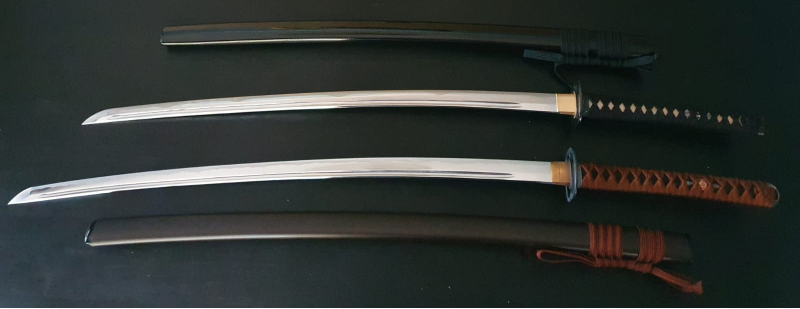
An iaitō (居合刀) is a blunt metal Japanese practice sword used safely to study Iaido, the martial art of drawing a blade. It looks like a real katana, but the metal blade is not sharp.
Each iaito is paired with a custom-made wooden saya that is coated with lacquer.
E. JO

The Jo (杖) is a wooden staff used as the primary weapon in the Japanese martial art of Jodo. It is designed as a versatile defensive tool intended to suppress an opponent's attack without necessarily causing injury.
The dimensions of the Jo is regulated by the All Japan Kendo Federation:
128cm (length), 2.4cm (diameter), white oak (shirakashi) or similar, straight and a rounded cylinder.
F. CARRY BAGS

Locally manufactured material carry bags with a carry strap.
"Blue carry bags" are made to carry up to 3 shinai and/or bokkens. Tsuba and tsuba dome must be removed and placed in the pocket at the top of the bag.
"Grey carry bags" are longer and are made to carry up to 3 jo, shinai, and/or bokken. Tsuba and tsuba dome must be removed and placed in the pocket at the top of the bag.
Children Shinai Carry Bags are also available that are able to carry shinai that are size 34 and smaller.
G: UNIFORMS & ZEKKEN / NAFUDA

The DOJI and HAKAMA are traditional Japanese clothing worn specifically for martial arts. At the RKC Dojo, we wear the dark blue uniform for Kendo and Jodo, and the black uniform for Iaido. The white uniform can also be worn for all three of the arts.
As a general guildline, the student who is still training, can purchase the uniform within 3-6 months from the start of their training.
A ZEKKEN or NAFUDA is a name tag that is worn to identify a budo practitioner. Kendo uses a pocket-like nafuda that is attached to the TARE, a specific part of the kendo armour (bogu). The iaido and jodo nafuda are smaller name tags that go on the left chest side of the DOJI, and must be the same colour as the uniform worn.
H. OBI

An obi (帯) is a sash of varying size and shape worn with both traditional Japanese clothing and uniforms for Japanese martial arts styles such as Kendo, Iaido and Jodo.
For Kendo and Jodo, the obi is an optional piece of garment than can be worn above the doji, but under the hakama.
However, for Iaido, the obi is a vital piece of the uniform as it ensures the swords remains in the correct position for the practise of this art.
Obi come in a variety of designs, leghths, width and material. However, for the practise of iaido, the practicality of the obi will supercede all other options. Please check with the iaido sensei to see which obi would be most suitable.
I. KNEE PADS

In Iaido, there will be times that the practitioners to be on their knees for an extended period of time, either during the reiho (formal etiquette) or kata practise. It is highly recommended that practitioners get a pair of suitable knee pads to prevent pain and discomfort during these moments.
There are specialised iaido knee pads that can be purchased, however, we have found that volleyball knee pads work just as well!
J. BOGU
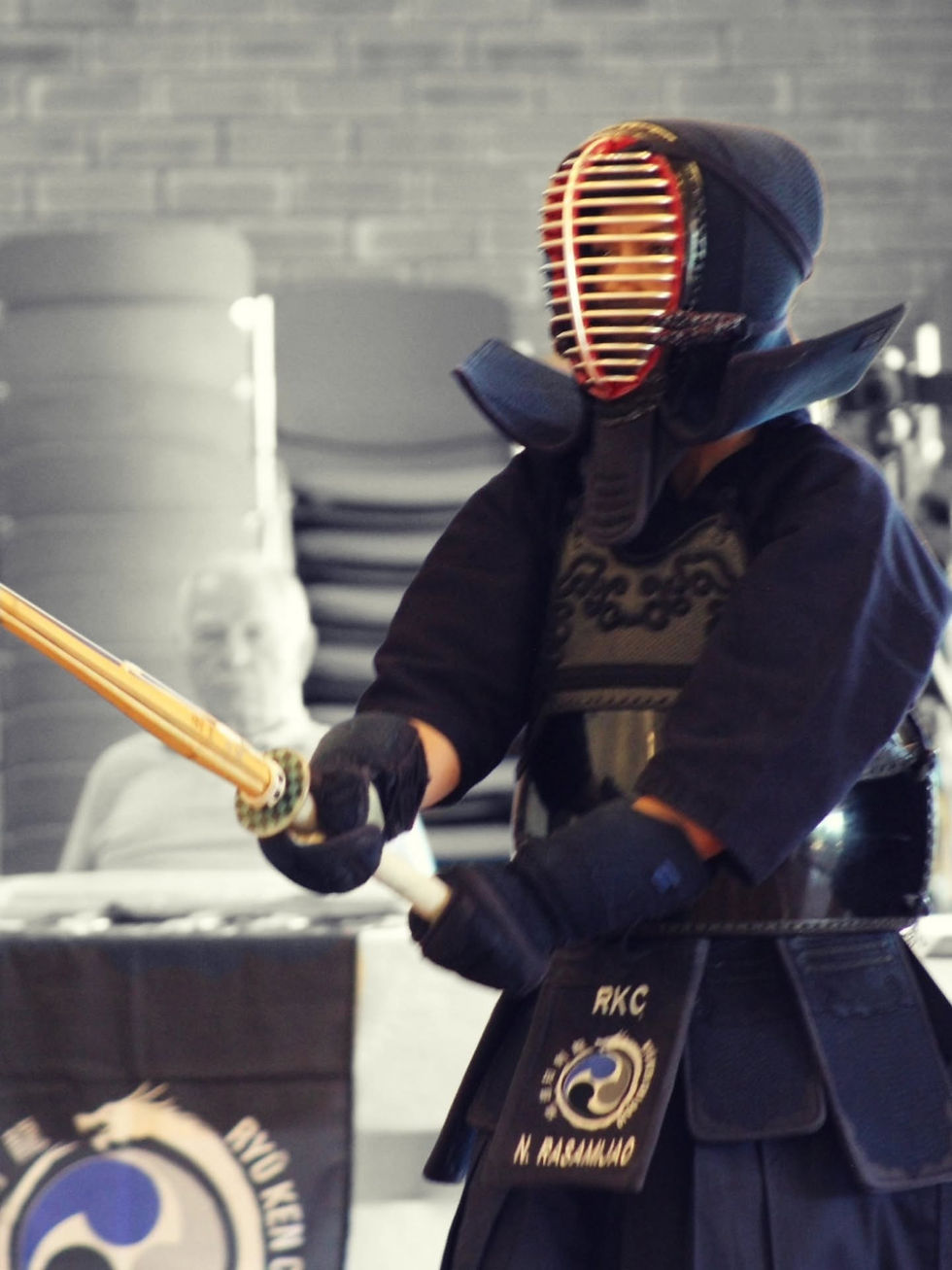
Kendo armour, BOGU (防具), has the primary role of ensuring the protection of the kendoka during a sparring session.
Bogu consists of 4 pieces:
MEN (面): combined face mask and shoulder protectors;
KOTE (小手): hand and forearm protectors;
DOU (胴): torso protector;
TARE (垂れ): groin and leg protectors.
There are additional pieces of equipment that one could wear for additional protection and injury-prevention. This would include protectors for: head, throat, hand, wrist, elbow, heal, foot, achilles tendon, calf muscle.
As a general guildline, the student who is still training, can purchase the bogu within 6-12 months from the start of their training.
It should be noted that a refurbised bogu can be purchased, provided the various pieces of the bogu fit correctly on the kendo practitioner so that it may fulfil its primary role of keeping the practitioner safe.
I. TENUGUI

A tenugui (手拭い) literally means "hand wiper" (te for hand, nugui for wipe). It is a traditional Japanese thin cotton cloth featuring raw, unfinished short edges that help it dry fast. The tenugui have been a staple of the Japanese home since the 9th century. These multi-purpose cloths are used everyday as hand towels, dishcloths, and washcloths.
It can be used in Kendo, iaido and Jodo.
The RKC Dojo prides itself as being one of the few dojo's outside of Japan that has made customised tenugui from Japan that uses the traditional print (dye) method of "Chu-sen" ( 注染 ).
The 2025-Limited-Edition-Purple-Tenugui is limited to 204 pieces only and was made longer and wider (35 or 36 cm X 100 cm) that will allow for different variations of wrapping it around ones head when doing Kendo).
J: FACE MASKS

There was a period where it was a requirement to wear a face mask whilst training in order to prevent the spread of an airborne virus. The RKC Dojo made some custom-design masks made that is supposed to looks like a Japanese "MENPO".
A menpo (also spelled mempo) is a traditional Japanese facial armor mask worn by samurai warriors. The mempo was often crafted with fierce, expressive features to intimidate enemies
The wearing of facemasks are no longer a requirement, but still looks great!
A limited number of these face-masks are still avilable.
For enquiries about the equipment used in Kendo, iaido and Jodo, please contact the RKC Dojo via email: info@rkcdojo.com.

Comments